
Extending Znode for B2B2C Business Models
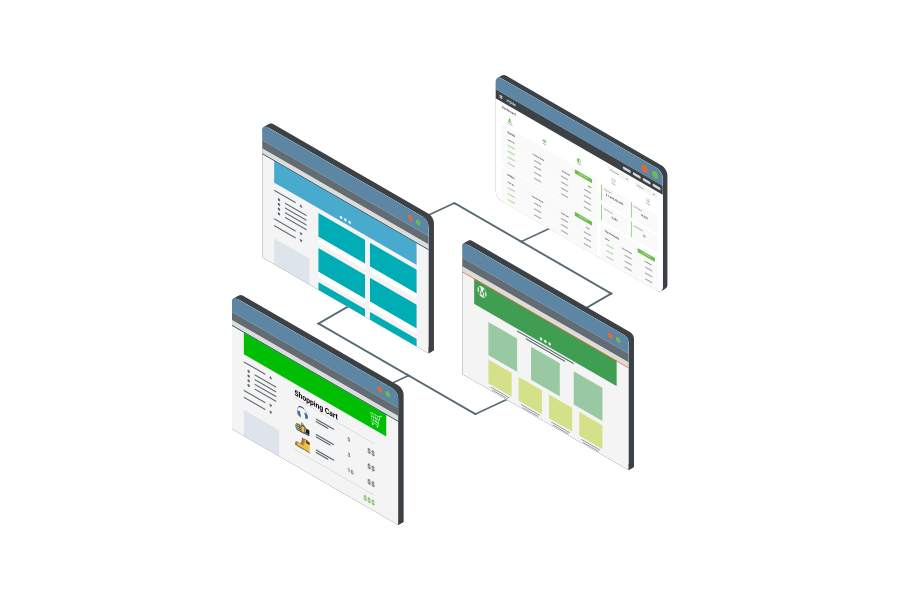
Znode B Stores extend a primary store into connected B2B2C storefronts, enabling organizations to support dealers, partners, and customer programs within a single platform. Each storefront operates independently while sharing catalogs, pricing, integrations, and order management, maintaining centralized control without introducing separate systems.
Znode B Stores enable:
- Extension of ecommerce to dealers and customer programs
- Multiple branded storefronts from a single Znode store
- Centralized management of catalogs, pricing, and orders
- Shared integrations across all storefronts
- Scalable B2B2C commerce without duplicating platforms

Power Program-Based Ecommerce at Scale
Centralize Control Across B2B2C Storefronts
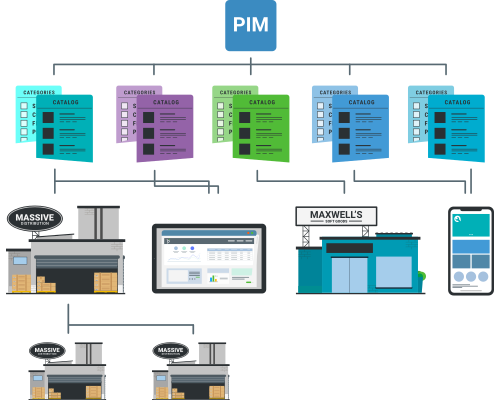
Manufacturers, distributors, and wholesalers support B2B2C models that require multiple storefronts across dealers, partners, and customer programs. While each storefront serves a different audience, all depend on shared product data, pricing, integrations, and order workflows managed centrally.
Znode B Stores extend ecommerce across connected storefronts while preserving a unified commerce foundation. Storefronts operate independently but remain tied to the same core platform for catalogs, pricing logic, integrations, and order management. Because B Stores are native to Znode, organizations can scale B2B2C commerce without adding systems or operational complexity, enabling teams to expand channels, maintain governance, and adapt as business models evolve.
Built for B2B2C Ecommerce

Centralized Storefront Management
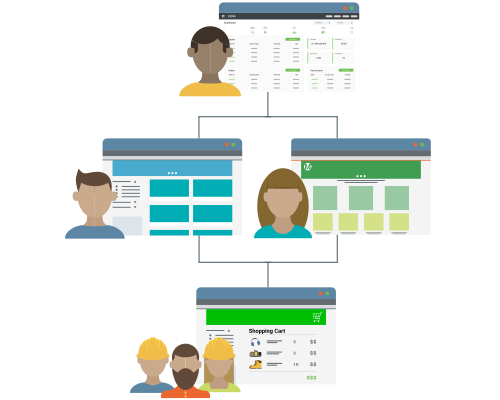
Manufacturers, distributors, and wholesalers manage B Stores from a single Znode Admin Console, with centralized control over product data, pricing, integrations, and orders.

Independent Storefront Execution
B Stores supports distinct dealer and customer programs while remaining connected to the same core commerce foundation.

Governance Without Operational Overhead
Shared data models and native platform configuration enforce consistency without custom development or additional systems.

Adaptable Channel Expansion
New storefronts and programs can be introduced as business strategies evolve.
The Result of B Stores on Znode
Centralized Control at Scale: Commerce teams maintain visibility and governance across all storefronts while supporting independent downstream experiences.
Faster Channel Expansion: New storefronts and programs can be launched quickly.
Reduced Operational Complexity: Shared data models and native platform capabilities minimize long‑term maintenance and administrative overhead.
Sustainable B2B2C Growth: Organizations can adapt storefront strategies as markets, partners, and customer programs evolve without disrupting core commerce operations.
B Stores Built on Znode
Znode B Stores extend a primary ecommerce implementation into multiple connected storefronts managed from a centralized Znode Admin. Core commerce data, configuration rules, and integrations remain unified, while storefront experiences operate independently for downstream channels.

Central Store Configuration
B Stores are configured from the primary Znode store. Administrators define storefront rules, templates, and governance centrally to ensure consistency across all downstream storefronts.

Controlled Storefront Enablement
Administrators grant access to approved B Store Managers. Storefront creation occurs within defined parameters, preserving control while enabling distributed execution.

Shared Commerce Foundation
All B Stores connect to the same core platform for catalogs, pricing logic, integrations, and order management. This maintains alignment across storefronts without requiring separate systems.

Centralized Data and Governance
Customer data, product information, and pricing rules remain centrally governed. Downstream storefronts operate within approved data models and access controls.

B Stores in Real B2B Environments
Manufacturers, distributors, and wholesalers use Znode B Stores to:
- Enable downstream dealer and partner storefronts
- Maintain centralized control over product data and pricing
- Support rapid deployment of new storefront experiences without system duplication
- Allow brand, content and experience flexibility within controlled limits
- Scale B2B2C commerce from a single platform
B Stores Support Multiple B2B2C Business Models
Znode B Stores support a range of B2B2C business models, allowing organizations to extend commerce across dealers, partners, programs, and internal teams from a single platform.
Book and Run Stores
Company Stores
Dealer Stores
Distributor Stores
Franchise Stores
Managed Marketplace
Program Stores
Reseller Stores
Sales Rep Stores
Team Stores
White Label Stores
Blog List
B Stores FAQs
Extend B2B Ecommerce into B2B2C Channels
Znode B Stores enable manufacturers, distributors, and wholesalers to extend ecommerce across dealers, partners, and customer programs while maintaining centralized control.
Request a Demo