

Native Ecommerce Integration Engine
The Znode Commerce Connector is a native integration engine built for B2B ecommerce integrations. It standardizes how the ecommerce platform exchanges data with ERP(s), PIM, DAM, CRM, and other business systems. Instead of relying on custom integrations, organizations manage ecommerce integrations through structured configurations inside Znode.
Commerce Connector Enables:
- Standardized data exchange frameworks
- Orchestration of data exchanges between Znode and any business system
- Flexible integration methods
- Real-time, on-demand, and scheduled processing
- Comprehensive entity-level mapping across Znode data
- Extensible processing logic
- Integration monitoring and governance
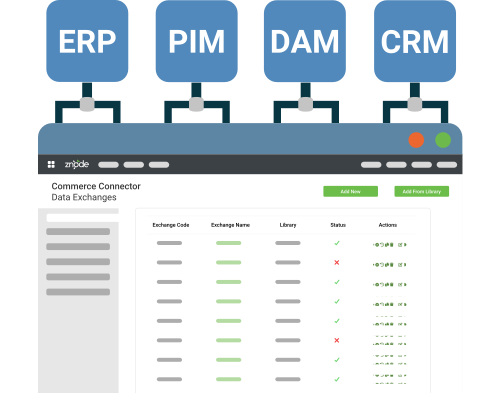

Control B2B Ecommerce Integrations Through Native Configuration
Manage ERP, PIM, DAM, CRM, and other enterprise integrations through a centralized framework inside Znode.
The Operational Cost of Custom Integrations
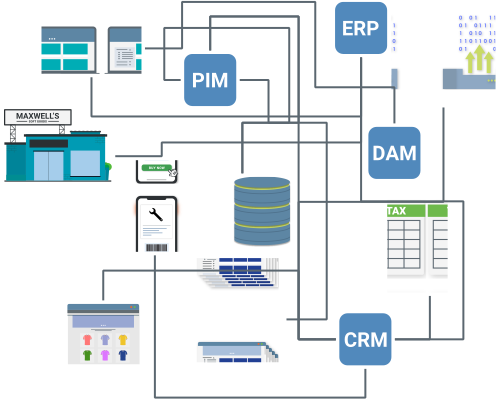
In B2B ecommerce, integrations are not optional. Critical operations rely on consistent data across ERP, CRM, PIM, and warehouse systems. As complexity grows, custom integrations become a bottleneck. Without a structured framework, organizations accumulate technical debt, limit agility, and increase long-term cost.
Providing Control to Complex Integration Environments
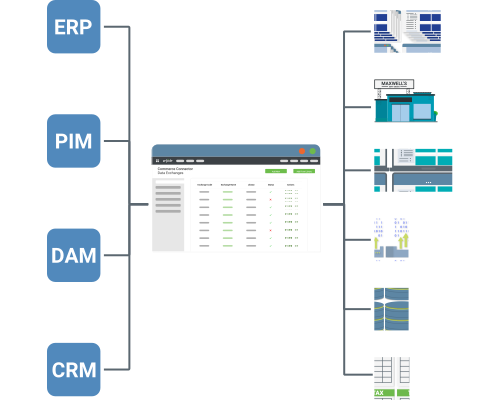
The Znode Commerce Connector changes how B2B ecommerce integrations are managed. Instead of relying on custom integrations, organizations define structured data exchanges through a centralized engine in Znode. This standardizes integration logic across systems and manages mapping, processing, security, and monitoring within a consistent model. The result is stronger governance, reduced risk, and lower long-term integration cost.
Architectural Advantages

Native Data Exchange Framework
Commerce Connector operates as a built-in integration engine within Znode. Integrations are defined through a standardized framework rather than external custom development.

Configuration Over Customization
Administrators configure data exchanges, mapping rules, and processing logic directly in the Znode Admin Console. This reduces dependency on development resources for routine updates.

Governed and Observable Integrations
Built-in security controls and logging provide visibility into integration activity. Organizations can monitor, audit, and manage data exchanges as part of normal ecommerce operations.
Enterprise Outcomes with the Znode Commerce Connector
The Znode Commerce Connector transforms integration management from a technical burden into a governed operational capability.

Accelerated Speed-to-Market
Launch and update ecommerce experiences without rebuilding system integrations. Configuration replaces lengthy custom development cycles.

Reduced Integration Cost
Minimize long-term development effort and reliance on third-party middleware. Structured data exchanges reduce maintenance overhead.

Reduced Dependency on IT
Operational teams manage integration workflows through configuration rather than custom code. Routine updates no longer require full development cycles.

Improved Data Accuracy and Consistency
Synchronize product, pricing, inventory, and order data through governed exchanges. Reduce discrepancies across ERP(s), CRM, and ecommerce systems.

Multi-System Scalability
Support multi-store, multi-ERP, and evolving technology environments without destabilizing integrations.

Simplified Management
Centralize monitoring, logging, and integration control within the platform. Integration management becomes part of normal ecommerce operations.
Configuration-Driven Integrations in Znode
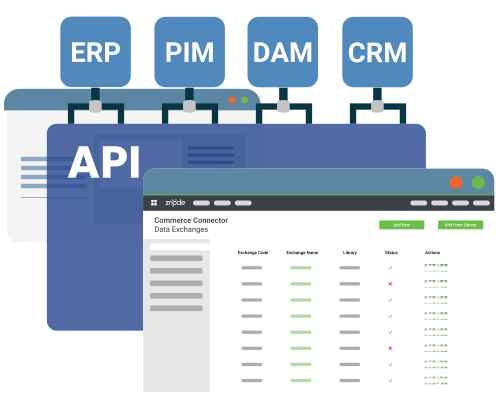
The Commerce Connector manages B2B ecommerce integrations through a configuration-driven framework built on Znode’s API-first architecture. Instead of custom-coded integrations, organizations define structured data exchanges within Znode. This creates a standardized integration layer that scales securely and gives teams direct control over integration management.
Core Integration Capabilities
Bi-directional Exchanges: Transmit data from Znode to an external system, and vice versa.
Data Mapping: Define how fields in Znode align with fields in ERP, CRM, PIM, and other systems. Administrators control how entities such as products, pricing, inventory, and orders move between platforms.
Data Transformation: Reformat or translate values during integration workflows to match the requirements of connected systems.
Flexible Exchange Methods: Support for multiple common integration methods and data formats allows connections with modern APIs and legacy enterprise systems.
Real-Time, On-Demand, and Scheduled Processing: Set data exchanges to run immediately or on defined schedules depending on operational requirements.
Custom Processors: Apply business rules, transformation logic, or validation steps within integration workflows.
Monitoring and Logging: Track integration activity and troubleshoot exchanges directly from the Admin Console.
Security and Authentication: Support for standard authentication protocols ensure secure and compliant system communication.
Scalability: Handle large data volumes across complex, multi-store ecommerce environments without degrading system performance.
Extensibility: Extend integrations through APIs and configuration to support unique workflows, additional systems, or evolving business requirements.
Designed for Enterprise Environments
The Commerce Connector integrations are deployed as lightweight extensions within enterprise environments. This architecture delivers strong performance and maintainability with minimal operational disruption. It supports large data volumes and complex systems while remaining extensible through APIs and configuration,
Ecommerce Integration Categories
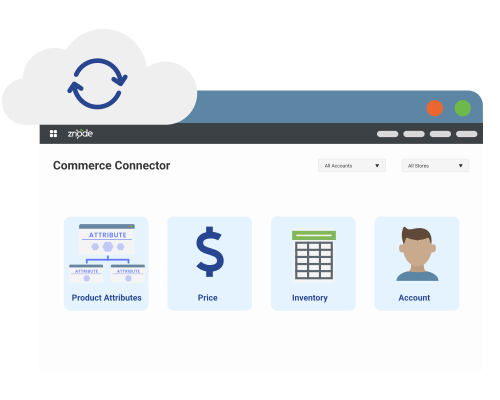
Commerce Connector supports configurable B2B ecommerce integrations across core business systems. Each integration category manages defined data exchanges between ecommerce and operational platforms. Administrators configure these integrations through a standardized framework inside the Znode Admin Console.

ERP and Accounting Systems
Synchronize products, pricing, inventory, accounts, and orders between ecommerce and ERP systems. Structured data exchanges ensure pricing accuracy and consistent transaction processing.
Examples: Microsoft Dynamics 365 Business Central, Microsoft Dynamics 365 Finance & Supply Chain Management, Infor, Epicor, SAP

CRM and Sales Systems
Exchange account, contact, and sales data between ecommerce and CRM platforms. These integrations align digital transactions with contract rules and sales workflows.
Examples: Salesforce, Microsoft Dynamics 365 CRM, HubSpot, Zoho CRM

PIM and Product Data Systems
Manage product attributes, specifications, and taxonomy through structured data exchanges with PIM systems. This ensures governed, consistent product data across catalogs and storefronts.
Examples: inRiver, Salsify, Pimberly, Perfion

DAM and File Storage Systems
Retrieve product images, documents, and other digital assets to enrich the ecommerce experience and reduce the management effort across storefronts.
Examples: Cloudflare, Bynder, Dropbox

CMS, Marketing, and Search Platforms
Coordinate ecommerce data with content management, marketing automation, and advanced search platforms. These integrations support personalization, campaign execution, and product discovery.
Examples: Sitefinity, Klaviyo, Dotdigital, HubSpot, HawkSearch, Algolia

Tax, Shipping, and Fulfillment Systmes
Automate tax calculation, rate shopping, shipment processing, and order fulfillment through structured data exchanges. These integrations ensure compliance and operational consistency.
Examples: Avalara, Vertex, UPS, USPS, FedEx

Business Intelligence and Analytics
Export ecommerce data to analytics systems for reporting and performance tracking. Structured data exchanges support consistent revenue and operational analysis.
Examples: Power BI, Tableau, Google Analytics, Snowflake
Common B2B Ecommerce Integration Use Cases
ERP Price and Inventory Synchronization: Automatically exchange pricing agreements, inventory availability, order data and more between ecommerce and ERP systems.
Customer Account Synchronization: Maintain consistent account structures, permissions, and role-based rules across CRM and ecommerce platforms.
Product Data Distribution: Synchronize product attributes, specifications, and digital assets between PIM systems and Znode.
Commerce Connector in Real B2B Environments
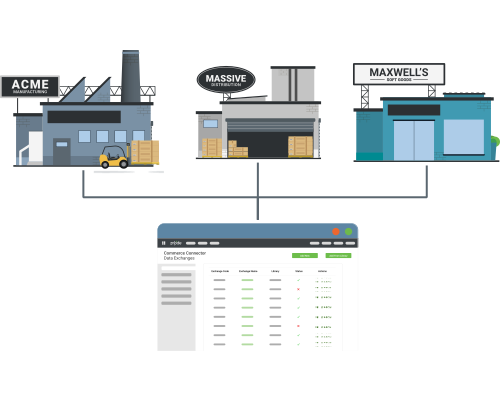
Manufacturers and distributors rely on the Znode Commerce Connector to manage data exchanges between ecommerce and core business systems. Integrations support complex pricing models, inventory synchronization, account structures, and order workflows across enterprise environments.



Blog List
Ecommerce Integration FAQs
Request a Demo
See the Commerce Connector in action and learn how Znode simplifies ERP, CRM, PIM, and business system integrations for B2B ecommerce.