

Ecommerce Product Information Management Built for B2B Complexity
The Znode Product Information Management (PIM) system centralizes ecommerce product information management across storefronts and catalogs, ensuring consistent product data across brands and buying experiences. Built for B2B PIM, it supports complex product data at scale with flexible modeling, unlimited attributes, and reusable data across catalogs and storefronts. Znode also integrates with external PIM systems as the system of record or part of a broader ecosystem.
B2B PIM in Znode Enables:
- Centralized ecommerce product information management across products, categories, and catalogs
- Unlimited attributes with flexible data modeling through groups and families
- Support for simple, configurable, bundled, and grouped product structures
- Multi-catalog management with curated assortments by store, account, or user
- Reuse of product data across catalogs without duplication
- Direct administrative control within the Admin Console
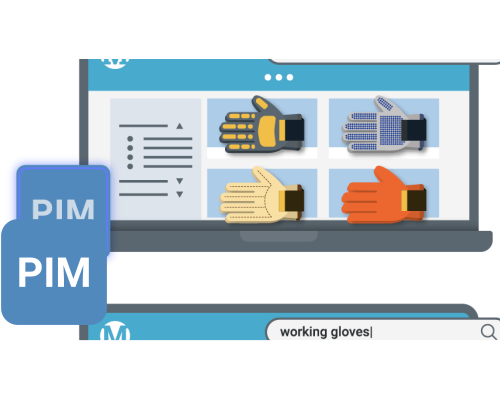

Deliver Accurate Product Data Across All Channels
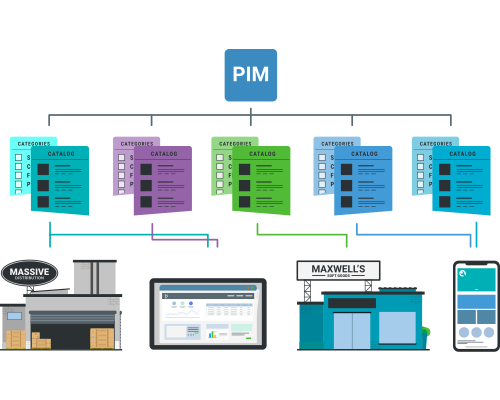
A Data Model Built for Multi-Store B2B Ecommerce
B2B product data does not scale within a single catalog. Manufacturers and distributors manage multiple storefronts, catalogs, and customer contexts with unique assortments and requirements. Znode solves this with a flexible, multi-store data model that enables product data to be defined once and reused across catalogs, storefronts, and customer experiences, eliminating duplication and supporting scalable growth.
Built for B2B Product Data Management

Centralized Product Data
The Znode Product Information Management (PIM) system operates as a native capability within the platform. Products, attributes, categories, and catalogs are managed within a unified data model across storefronts.

Flexible Data Model Control
Administrators define attributes, groups, and families directly within the Administration Console. Product data structures can be extended without development, allowing teams to adapt to changing product requirements.

Multi-Store Catalog Management
Manufacturers, distributors, and wholesalers manage product catalogs across storefronts, brands, and customer segments. Znode enables tailored catalog experiences while maintaining a centralized product data foundation.

Unlimited Scale for Products and Attributes
Znode supports unlimited attributes, products, and catalogs. Product data scales with expanding catalogs, storefronts, and business models without restructuring.

Product Structure and Merchandising Flexibility
Support for simple, configurable, bundled, and grouped products allows teams to model how products are sold and presented across different buying scenarios.

Znode In Action
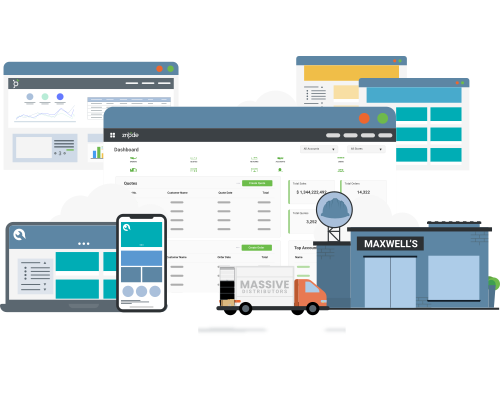
The leading promotional products distributor in North America uses Znode’s PIM and multi-store architecture to manage product data across more than 400 unique storefronts. Each store is supported by a tailored catalog, pricing, and digital experience aligned to client-specific requirements. Product data is centrally managed and reused across storefronts, reducing duplication while maintaining consistency at scale.
The Impact of Flexible B2B PIM

Scalable Product and Catalog Management
Support unlimited attributes, catalogs, and storefront expansion.

Consistent Product Data Across Stores
Maintain aligned attributes and product relationships across every experience.

Faster Speed to Market
Deploy product data across storefronts and catalogs without restructuring.

Reduced Product Data Duplication
Eliminate redundant product data by creating and reusing product information across catalogs and storefronts.

Stronger Product Data Governance
Enforce consistent data structures, attribute usage, and naming conventions across catalogs and storefronts.

Reduced Operational Overhead
Manage product data without ongoing development dependency.
Managing Ecommerce Product Information at Scale
Znode provides administrators with direct control over how product data is structured, managed, and distributed across catalogs and storefronts. Teams define product attributes, organize product data, and manage catalogs directly within the Admin Console while maintaining a consistent data model across the platform.
Product Data Modeling and Structuring
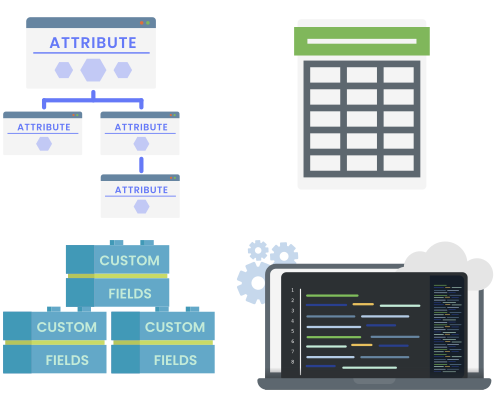
Attributes, Groups, and Families
Define product attributes and organize them into groups and families to control how product data is structured and displayed.
Unlimited Attribute Management
Create and manage unlimited attributes across products, categories, and other entities without development.
Dynamic Data Model Control
Extend and adjust the product data model directly within the Admin Console as product requirements evolve.
Catalog and Multi-Store Management
Multi-Catalog Configuration
Create and manage multiple catalogs with curated product assortments.
Store, Account, and User Catalog Assignment
Assign catalogs to storefronts, accounts, or users to control product visibility and access.
Category and Catalog Hierarchy Management
Build category structures that define how products are organized across storefronts.
Product Structure and Administration
Flexible Product Types
Support simple, configurable, bundled, and grouped products to match merchandising and buying scenarios.
Centralized Product Management
Create, update, and manage products, categories, and catalogs from a single Admin Console.
Bulk Data Management
Upload and manage large volumes of product data through structured templates and bulk operations.
Scaling Product Data Across B2B Ecommerce for Manufacturers, Distributors, and Wholesalers
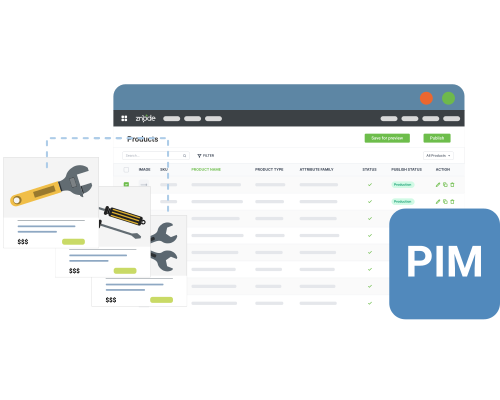
B2B ecommerce success starts with product data. A centralized, flexible product data model supports multi‑brand growth, account‑specific experiences, and complex catalogs across the business.

Multi-Brand and Multi-Store Catalog Management
Manage distinct product catalogs across brands, business units, and storefronts within a single platform while maintaining a centralized product data model.

Account-Specific Product Assortments
Control product visibility, assortments, and access by account, contract, or customer segment without duplicating product data.
Complex Product Configuration and Variants
Support configurable products with multiple attributes and variations while maintaining structured, consistent product data.

Large-Scale Catalog Management for Manufacturers amd Distributors
Manage extensive product catalogs with thousands of SKUs, evolving product structures, and ongoing data updates at scale.

Product Data Standardization and Governance
Standardize product attributes, naming conventions, and data structures to maintain consistency across catalogs and storefronts.
Catalog Expansion Across New Stores and Markets
Launch new storefronts, catalogs, and product assortments without restructuring product data or duplicating product information.
Managing Native or PIM Ecommerce Integration for Multi-Store Environments
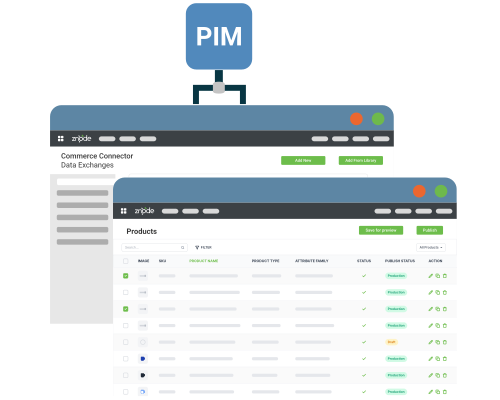
The Znode Product Information Management (PIM) system manages commerce-ready product data within the platform. Organizations can manage product data directly in Znode or integrate with external PIM systems through the Commerce Connector as part of a broader architecture. Product data remains consistent across systems while organizations control how it is structured and delivered across ecommerce experiences.
Blog List
Ecommerce Product Information Management FAQs
Take Control of B2B Product Data
The Znode Product Information Management (PIM) system provides the structure, flexibility, and scale required to manage complex product data across catalogs, storefronts, and customer experiences.
Request a Demo