
Unified Content Management
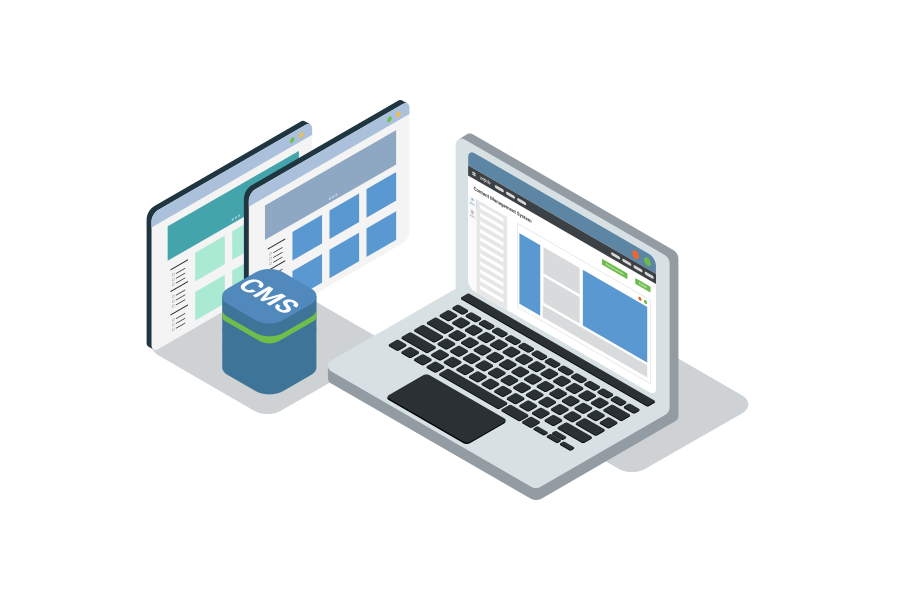
Znode delivers flexible ecommerce content management for manufacturers, distributors, and wholesalers. Teams can manage ecommerce content directly within the platform or integrate a third-party CMS as part of a broader enterprise content ecosystem. The Znode CMS connects content directly to products, categories, and promotions, enabling teams to manage and optimize the entire ecommerce experience from a single platform.
The Znode CMS Enables:
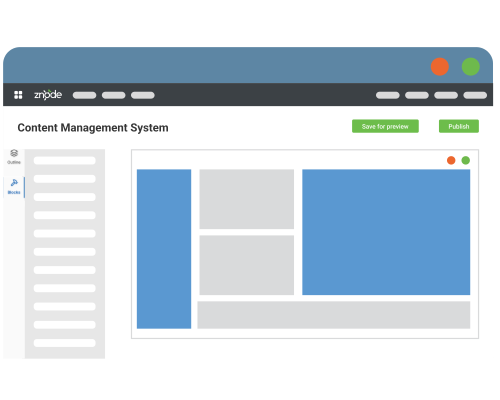
- Drag-and-drop page creation with the built-in Visual Page Builder
- Management of storefront, marketing, and promotional content
- Dynamic content connected to products and categories
- Blog and news publishing for marketing and SEO
- Custom forms for capturing customer inquiries and leads
- Built-in SEO configuration for pages, products, and categories
- Configurable email templates for ecommerce communications

Enterprise B2B Content Management
Support complex content structures, personalization, and multi-channel publishing.
Managing Ecommerce Content Across Storefronts
As B2B ecommerce grows, ecommerce content management becomes more complex across systems, teams, and channels. Product content, marketing pages, and promotions directly shape how buyers navigate and evaluate the storefront experience. The Znode CMS brings ecommerce content management into the platform, enabling teams to manage pages, campaigns, and merchandising alongside product and commerce data. With direct connections to catalogs, categories, and promotions, teams can manage and optimize the entire ecommerce experience in one platform, while maintaining the flexibility to integrate with third-party CMS solutions through its API-first architecture.
A Better Way to Manage Ecommerce Content

Unified Content and Commerce
The Znode CMS operates as a native capability within the ecommerce platform. Content, product data, and storefront configuration are managed in one environment, reducing platform complexity.

Marketing-Controlled Experiences
Marketing and commerce teams manage storefront pages, campaigns, and merchandising content without relying on development resources. Page Builder and configurable components allow teams to launch and update content quickly.

Content Connected to Commerce
Because the CMS operates within Znode, content connects directly with product catalogs, categories, and promotions. This allows merchandising and marketing experiences to be managed directly within the storefront.

Tailored Content Experiences
Znode allows organizations to tailor content across storefronts, brands, and customer experiences. Configurable content containers and components support structured, customizable content management.

Headless Content Delivery
Znode supports headless ecommerce architectures through its API-first platform. Content managed in the CMS can be delivered to storefronts, mobile experiences, and other digital applications.
The Impact of Unified Ecommerce Content Management
Faster Campaign Execution: Marketing teams can launch landing pages, promotional content, and merchandising experiences without relying on development resources. Campaigns can be created, updated, and published directly within the platform.
Reduced Platform Complexity: Managing content within the ecommerce platform reduces the operational overhead of maintaining a separate CMS. Content and commerce workflows are handled within a single system.
Marketing and Ecommerce Team Autonomy: Page Builder and configurable content tools give marketing and commerce teams direct control over storefront experiences. Teams can update content, launch campaigns, and adjust merchandising without waiting for development cycles.
Strong Product Discovery and Merchandising: Content connected directly to product catalogs and categories allows organizations to guide buyers through the purchasing journey. Merchandising content, product information, and marketing messaging work together to support product discovery.
Flexible Content Delivery Across Experiences: With API-first architecture and support for headless implementations, organizations can manage content in Znode and deliver it across storefronts, brands, and digital applications.
Content Management for Ecommerce Teams
Znode provides a set of content management tools designed to support how ecommerce teams manage storefront experiences. Marketing and commerce teams can create, manage, and update content directly within the platform without relying on development resources.
Visual Page Builder
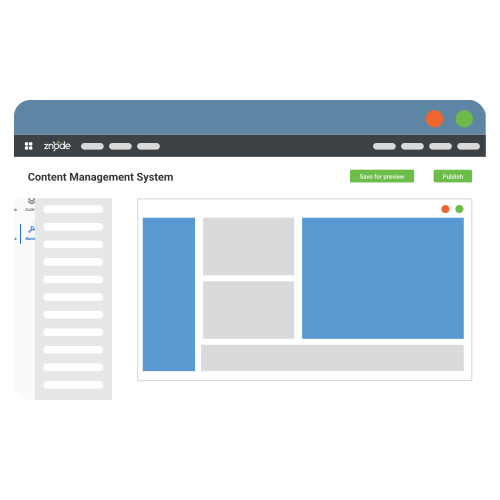
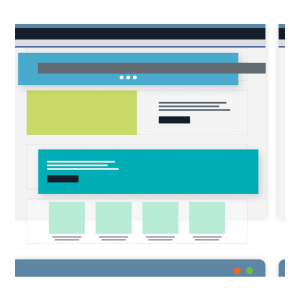
Znode includes a visual Page Builder that allows teams to create and manage storefront pages through drag-and-drop components and pre-built templates. Teams can quickly build landing pages, marketing content, and merchandising experiences.
Structured Content Management
Content containers allow organizations to structure and manage reusable content across storefront experiences. Administrators define content structures while marketing teams manage the content itself.

Customer Engagement and Forms
Configurable forms allow organizations to capture customer inquiries, quote requests, and campaign responses directly through the storefront.
SEO and Content Visibility
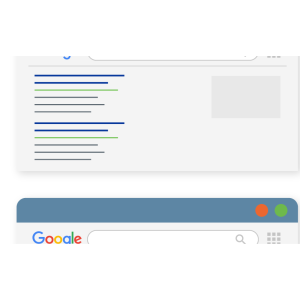
SEO settings can be configured for products, categories, brands, and custom pages, helping organizations manage search visibility alongside storefront content.

Campaign and Promotional Content
Teams can create and manage marketing content directly within the platform, including campaign landing pages, promotional messaging, and merchandising content that supports product discovery.

Blog and Content Publishing
Znode supports blog and news publishing within the platform, allowing organizations to share industry insights, product updates, and thought leadership content while supporting SEO strategies.
Flexible Front-End Delivery
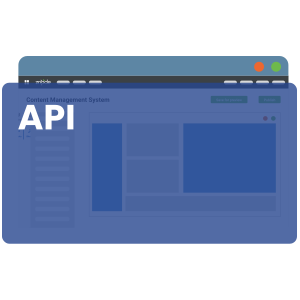
With a customizable React front end and API-first architecture, Znode supports both traditional storefront experiences and headless implementations. Content managed in Znode can be delivered across multiple digital experiences and channels.
Ecommerce Content Management Use Cases

Campaign Landing Pages
Launch marketing landing pages for promotions, product launches, or seasonal campaigns without development support.

Product Merchandising Content
Combine product information with marketing content to guide buyers through product discovery and purchasing decisions.

Manufacturer and Distributor Resources

Thought Leadership and SEO Content
Publish blog posts, product insights, and industry updates that support SEO and thought leadership strategies
Blog List
Ecommerce Content Management FAQs
Power Strong Ecommerce Experiences
Create and publish content, merchandising, and promotions across brands and channels while maintaining a consistent customer experience.
Request a Demo