
Znode
Optimizely Configured Commerce
A detailed comparison of Znode and Optimizely Configured Commerce for manufacturers, distributors, and wholesalers evaluating B2B ecommerce platforms, multi-store operations, and long-term scalability.
Executive summary
Znode and Optimizely Configured Commerce both enable B2B ecommerce, but they are designed for different business models. Znode delivers multi-store commerce, purchasing workflows, and account-based buying natively in the platform. Many B2B organizations operate multiple storefronts, brands, or customer segments, making centralized multi-store management a core requirement. Optimizely Configured Commerce needs customization to support these operational scenarios. As B2B buying processes become more digital and self-service oriented, the platform must support them without expensive custom development and related ongoing maintenance.
Znode is purpose-built for B2B operations. Optimizely adapts B2B into a broader commerce platform.
What is Znode?
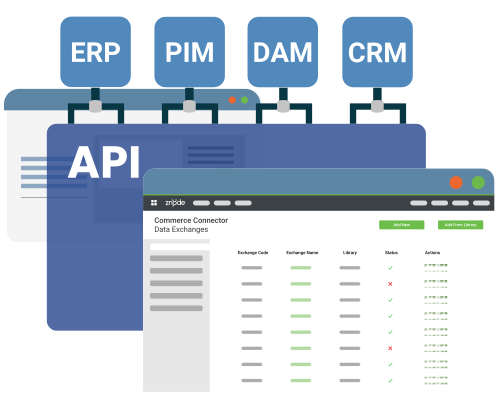
Znode is a distributed SaaS B2B ecommerce platform designed for manufacturers and distributors. It provides native support for complex pricing, account-based purchasing, multi-store management, and B2B2X operations. The platform operates independently of retail architecture and integrates with ERP, CRM, PIM, and other operational systems through its API-first architecture and Commerce Connector.
What is Optimizely Configured Commerce?
Optimizely Configured Commerce is a small B2B ecommerce offering within the broader Optimizely product family which specializes in A/B testing and content management. It supports B2B purchasing workflows but often relies on custom development to support advanced B2B scenarios such as multi-store environments and customer specific experiences.
Znode is built for modern B2B ecommerce
Znode is developed specifically for B2B ecommerce and provides native capabilities such as account-based catalogs, role-based purchasing, and structured buying workflows through configuration rather than extensions or custom development. The platform supports current B2B requirements including distributor enablement, multi organization purchasing, and complex pricing.
Optimizely Configured Commerce supports B2B use cases, but many modern B2B experiences, including customer portals and dealer workflows, require customization to function as expected. Reliance on development increases implementation effort and slows adoption of new capabilities.
Znode delivers modern B2B functionality natively. Optimizely requires development to reach the same workflows.

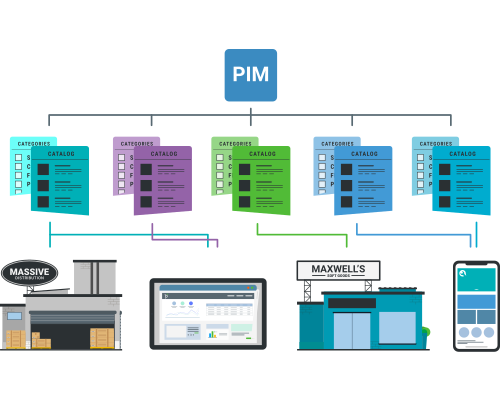
Znode supports distributed and multi-store commerce
Znode supports multi store environments, account specific catalogs, dealer portals, and B2B2X models as native platform functionality. These capabilities allow organizations to operate multiple brands, divisions, and buying experiences from a single Admin Console.
Optimizely Configured Commerce has no native support for multi-store and distributed commerce scenarios. Many multi-brand, dealer, and portal use cases require customization or additional systems, such as a third-party Product Information Management system. Organizations running multiple storefronts or customer segments often need separate development effort to support each experience.
Znode enables multi-store ecommerce from one platform. Optimizely requires project-based expansion.
Znode reduces customization effort and long-term maintenance
Znode provides configuration, APIs, and extension points to change behavior without modifying core application code. Integrations and workflows can be updated without rebuilding platform functionality.
Optimizely Configured Commerce commonly relies on code level changes to support customer portals, distributor workflows, and advanced B2B scenarios. Custom development must be maintained and validated during upgrades and enhancements. The difference affects implementation effort, upgrade planning, and long-term cost of ownership.
Znode changes through configuration. Optimizely changes through development.
Comparing Znode and Optimizely Configured Commerce
B2B Ecommerce Features
| Feature | Znode | Optimizely Configured Commerce |
|---|---|---|
| Multi-Store | Yes, Native, Unlimited | No, Customization |
| Account-Based Catalogs | Yes, Native | No, Customization |
| Customer-Specific Pricing | Yes, Native | Yes, Native |
| Customer-Specific Catalogs | Yes, Native | Yes, Native |
| Tiered, Contract Pricing | Yes, Native | Yes, Native |
| Account Management Roles & Permissions | Yes, Native | Yes, Native |
| Quotes, RFQs | Yes, Native | Add-On |
| Order Approval Workflows | Yes, Native | Yes, Native |
| Reordering, Saved Carts, Quick Order | Yes, Native | Yes, Native |
| Sales Rep Impersonation & Tools | Yes, Native | Yes, Native |
| Customer Portal | Yes, Native | No, Customization |
| Dealer & Distributor Enablement | Yes, Native | No, Customization |
| B2B2X Support | Yes, Native | No |
| Self Service Portal | Yes, Native | Yes, Native |
| Dealer & Distributor Portal | Yes, Native | No, Customization |
| Sales Rep Portal | Yes, Native | No |
Modern Commerce Capabilities
| Feature | Znode | Optimizely Configured Commerce |
|---|---|---|
| CMS with Drop and Drag Page Builder | Yes, Native, Unlimited | Yes, Native |
| Headless Front-End | Yes | Yes, Native |
| Personalization | Yes, Native | Yes, Native |
| Multi-Language | Yes, Native | Yes, Native |
| Multi-Currency | Yes, Native | Yes, Native |
| Language Translation | Yes, Native | Yes, Native |
| Regional Content Personalization | Yes, Native | Yes, Native |
| AI-Enabled MCP Server | Yes, Native | Yes |
| AI-Powered Site Search | Yes, Native | Yes |
| AI-Powered Search Engine Optimization | Yes, Native | Yes |
| Promotions | Yes, Native | Yes, Limited |
| BI Reporting | Yes, Native | Yes |
Architecture and Extensibility
| Feature | Znode | Optimizely Configured Commerce |
|---|---|---|
| Headless | Yes | Limited |
| API-First | Yes, 2,500+ API Endpoints | Limited |
| Customization Layer via API | Yes, Limitless Extension Points | No, Code Level |
| Distributed SaaS | Yes | Yes |
| Upgrade Impact | Low | Low |
| Native ERP Integrations | Yes, Commerce Connector | Yes, Limited |
| Integration Type | Real-Time + Batch | Real-Time + Batch |
| Third-Party System Integrations | Yes | No, Customization |
| Integration Logging and Monitoring | Yes, Native | No |
Performance and Scalability
| Feature | Znode | Optimizely Configured Commerce |
|---|---|---|
| Supports Large SKU Counts | Yes | Yes, Limited |
| Infrastructure Model | Distributed SaaS | Distributed SaaS |
| Global Deployment | Yes | Yes |
| Scalability | Unlimited | Unlimited |
B2B2C Capabilities
| Feature | Znode | Optimizely Configured Commerce |
|---|---|---|
| Supports B2B2C | Yes, Native | No |
| Supports Multiple Catalogs per Store | Yes | No |
| Central Governance | Yes | Yes |
| White Label Sites and Microsites | Yes, Native | No |
When Znode is a better fit
Znode is commonly selected by organizations operating multiple business models or customer experiences.
Znode fits best when organizations need:
- Multiple storefronts, brands, or customer segments
- Dealer, distributor, or B2B2X commerce models
- Account based purchasing with roles and approval workflows
- Complex pricing and customer specific catalogs
- Native customer and dealer portal experiences
- Expansion into new channels or business units without new implementations
When Optimizely Configured Commerce may fit
Optimizely Configured Commerce may align with organizations operating a single primary storefront with limited variation in buying experiences.
Optimizely may fit best when organizations have:
- A single brand or storefront experience
- Standard purchasing workflows
- Internal development resources for customization and maintenance
- Willingness to extend functionality through development projects
- Limited need for distributor or multi organization commerce models
Znode vs Optimizely Configured Commerce FAQs
Znode is a native B2B ecommerce platform that manages multi-store commerce, pricing, and purchasing workflows directly in the platform. Optimizely Configured Commerce supports B2B functionality but often requires customization to support advanced workflows and multiple storefront experiences.
Optimizely Configured Commerce requires customization and a third-party PIM to support multiple storefront experiences. Znode provides multi-store functionality natively within the platform.
Znode includes native dealer and distributor portal capabilities and B2B2X commerce models. Optimizely Configured Commerce typically requires customization to support similar experiences.
Znode natively supports contract pricing, customer specific pricing, account hierarchies, and approval workflows within the ecommerce platform.
Many manufacturers and distributors operate multiple brands, divisions, or customer experiences. Managing these from a single platform allows centralized administration, consistent pricing control, and easier expansion into new channels.
Optimizely Configured Commerce commonly needs custom development to support advanced B2B experiences such as portals, multi-store commerce, and specialized workflows. Znode uses configuration and APIs to enable these capabilities.
Considering Optimizely Configured Commerce? Take a Tour of Znode to Experience the Difference.
Review your B2B requirements with the Znode team to determine the right fit. Request a demo.