
Znode
Commercetools
A detailed comparison of Znode and Commercetools for manufacturers and distributors evaluating B2B ecommerce architecture, operational complexity, and total cost of ownership.
Executive summary
Commercetools and Znode represent two fundamentally different models for building ecommerce experiences.
Znode is a distributed SaaS platform designed specifically for B2B ecommerce. Core capabilities such as complex pricing, quoting, account hierarchies, and integrations operate natively within a unified platform, reducing the need for custom development or additional systems. Commercetools is a composable commerce framework that provides the building blocks to create a commerce environment. Organizations assemble capabilities through microservices, integrations, and third-party services, often shifting responsibility to internal teams to build and maintain the solution. This difference impacts platform ownership, operational complexity, and total cost.
Znode delivers a complete B2B platform with predictable cost, simplified upgrades, and faster time to value. Commercetools offers flexibility through composability, but typically requires greater technical coordination, higher maintenance budgets, and ongoing effort to manage and evolve the environment.
What is Znode?
Znode is a distributed SaaS B2B ecommerce platform designed specifically for manufacturers and distributors. It provides native support for complex pricing, account hierarchies, multi-store management, dealer enablement, and B2B2X operations. The platform operates within a unified commerce architecture that integrates with ERP, CRM, PIM, and other operational systems through the Commerce Connector and API-first framework. Znode centralizes commerce functionality in a single platform built for enterprise scalability and operational efficiency.
What is Commercetools?
Commercetools is a composable commerce platform built around microservices and APIs. The platform enables organizations to assemble commerce capabilities through a modular architecture that integrates with external services and custom applications. This composable approach provides flexibility but often requires multiple services, integrations, and development resources to deliver a complete commerce environment. Organizations typically manage a broader ecosystem of tools to operate and maintain the platform.
Znode delivers native B2B ecommerce without dependency on custom-built architectures
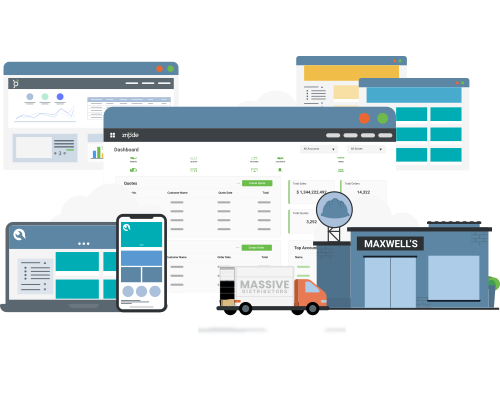
Znode provides a unified commerce platform where core B2B functionality operates natively within the system. Capabilities such as account-based pricing, quoting, dealer enablement, and multi-store management are built directly into the platform.
Commercetools is designed as a composable commerce framework that serves as a foundation for building custom commerce environments. Core capabilities are assembled through microservices, integrations, and development effort rather than delivered natively in a single platform. This approach often shifts responsibility to development teams to create and maintain a complete solution, increasing time to value and ongoing complexity.
Znode delivers a complete B2B platform. Commercetools provides the building blocks to create one.

Znode reduces operational complexity and total cost of ownership
Znode centralizes commerce operations within one platform that can be managed by a small internal team. Core commerce functionality, integrations, and infrastructure operate together in a unified environment.
Commercetools often relies on a composable approach that brings together multiple best-of-breed services. Organizations must implement and manage a combination of third-party systems, integrations, and supporting tools to deliver a complete commerce solution. This increases the total cost of ownership over time, requiring a higher budget for implementation, coordination, and ongoing maintenance across the commerce ecosystem.
Znode simplifies platform management with predictable cost. Commercetools introduces additional systems, complexity, and ongoing overhead.
Znode simplifies upgrades and platform evolution
Znode operates as a distributed SaaS platform where updates are delivered with minimal operational disruption. New capabilities can be adopted without validating compatibility across a large ecosystem of independent services.
Commercetools upgrades often require validation across multiple microservices, integrations, and custom components before changes can be implemented. As the environment grows more complex, upgrade coordination can require additional effort.
Znode enables faster platform evolution with lower update impact. Commercetools environments require more coordination to maintain stability.


Znode delivers a complete B2B platform. Commercetools requires custom building to operate
Znode provides a unified commerce platform with native B2B functionality built directly into the system. Core capabilities such as pricing, quoting, account management, and integrations operate within a single platform, reducing the need for custom development.
Commercetools is designed as a composable framework that provides the building blocks for commerce. It does not include a complete front-end or fully packaged business functionality, requiring organizations to assemble and maintain their own solution through microservices and development efforts. This turns commerce into a custom software initiative, increasing implementation time and ongoing maintenance requirements.
Znode delivers a complete platform. Commercetools provides the foundation to build one.
Comparing Znode and Commercetools
B2B Ecommerce Features
| Feature | Znode | Commercetools |
|---|---|---|
| Multi-Store | Yes, Native, Unlimited | Yes, Native |
| Account-Based Catalogs | Yes, Native | Yes, Native |
| Customer-Specific Pricing | Yes, Native | Yes, Native |
| Customer-Specific Catalogs | Yes, Native | Yes, Native |
| Tiered, Contract Pricing | Yes, Native | Yes, Native |
| Account Management Roles & Permissions | Yes, Native | Limited |
| Quotes, RFQs | Yes, Native | Limited |
| Order Approval Workflows | Yes, Native | Yes, Native |
| Reordering, Saved Carts, Quick Order | Yes, Native | Yes, Native |
| Sales Rep Impersonation & Tools | Yes, Native | Limited |
| Customer Portal | Yes, Native | No |
| Dealer & Distributor Enablement | Yes, Native | No |
| B2B2X Support | Yes, Native | No |
| Self Service Portal | Yes, Native | No |
| Dealer & Distributor Portal | Yes, Native | No |
| Sales Rep Portal | Yes, Native | No |
Modern Commerce Capabilities
| Feature | Znode | Commercetools |
|---|---|---|
| CMS with Drop and Drag Page Builder | Yes, Native, Unlimited | Limited |
| Headless Front-End | Yes | Yes |
| Personalization | Yes, Native | Limited |
| Multi-Language | Yes, Native | Yes, Native |
| Multi-Currency | Yes, Native | Yes, Native |
| Language Translation | Yes, Native | Yes, Native |
| Regional Content Personalization | Yes, Native | Yes, Native |
| AI-Enabled MCP Server | Yes, Native | Yes |
| AI-Powered Site Search | Yes, Native | Limited, Integrations |
| AI-Powered Search Engine Optimization | Yes, Native | Limited, Integrations |
| Promotions | Yes, Native | Limited |
| BI Reporting | Yes, Native | Limited |
Architecture and Extensibility
| Feature | Znode | Commercetools |
|---|---|---|
| Headless | Yes | Yes |
| API-First | Yes, 2,500+ API Endpoints | Yes |
| Customization Layer via API | Yes, Limitless Extension Points | Yes |
| Distributed SaaS | Yes | Yes |
| Upgrade Impact | Low | Moderate |
| Native ERP Integrations | Yes, Commerce Connector | No |
| Integration Type | Real-Time + Batch | Real-Time |
| Third-Party System Integrations | Yes | No |
| Integration Logging and Monitoring | Yes, Native | No |
Performance and Scalability
| Feature | Znode | Commercetools |
|---|---|---|
| Supports Large SKU Counts | Yes | Yes |
| Infrastructure Model | Distributed SaaS | Distributed SaaS |
| Global Deployment | Yes | Yes |
| Scalability | Unlimited | High |
B2B2C Capabilities
| Feature | Znode | Commercetools |
|---|---|---|
| Supports B2B2C | Yes, Native | No |
| Supports Multiple Catalogs per Store | Yes | Yes |
| Central Governance | Yes | Yes |
| White Label Sites and Microsites | Yes, Native | No |
When Znode is a better fit
Znode is commonly selected by manufacturers and distributors that require enterprise B2B ecommerce capabilities delivered within a unified platform.
Znode fits best when organizations need:
- Native B2B functionality without assembling multiple microservices
- A centralized platform that can be managed by a small internal team
- Faster deployment without extensive custom development
- Distributed SaaS infrastructure with low upgrade impact
- Structured ERP and operational system integrations through Commerce Connector
- Predictable total cost of ownership aligned directly to ecommerce operations
- Enterprise multi-store governance and B2B2X commerce support
When Commercetools may fit
Commercetools may align with organizations pursuing a composable commerce architecture built around microservices and APIs.
Commercetools may fit best when organizations have:
- Large internal development teams experienced in composable architectures
- A strategy centered on assembling commerce capabilities through microservices
- Internal resources to manage integrations, services, and platform orchestration
- A preference for building custom commerce experiences through development frameworks
- Complex technical environments where flexibility through modular architecture is a priority
Znode vs Commercetools FAQs
Znode is a distributed SaaS platform built specifically for B2B ecommerce. Core capabilities such as complex pricing, account hierarchies, multi-store governance, and integrations operate natively within a unified platform.
Commercetools is a composable commerce framework built around microservices and APIs. Organizations typically assemble multiple services and integrations to create a complete commerce environment. The primary difference is platform simplicity versus composable architecture.
Yes. Commercetools is designed as a headless and API-first commerce framework where storefronts, services, and integrations are assembled through microservices. Znode also supports headless ecommerce but provides core B2B functionality natively within the platform, reducing the need to assemble multiple services to operate the commerce environment.
Znode centralizes commerce capabilities within a unified platform that can typically be managed by a small internal team. Commercetools environments often involve multiple microservices, integrations, and supporting tools. Managing and coordinating these services can require larger technical teams and additional development resources.
Znode operates as distributed SaaS, where platform updates are delivered with minimal operational disruption. Commercetools upgrades often require validation across multiple microservices, integrations, and custom components to ensure compatibility within the environment.
No. Znode provides a highly flexible, API-first architecture with support for unlimited attributes, custom tables, and user-defined fields to model complex commerce requirements. Znode also supports a fully headless approach while offering a B2B storefront and portal accelerator to reduce implementation time. The result is the same level of flexibility as Commercetools, delivered with faster speed to market and lower total cost of ownership.
Znode delivers extensive B2B functionality natively within the platform, including dealer enablement, sales rep tools, B2B2X support, and multi-store governance. Commercetools provides core commerce capabilities but often requires additional services or custom development to deliver the same level of B2B operational functionality.
Considering Commercetools? Take a Tour of Znode to Experience the Difference.
Review your B2B requirements with the Znode team to determine the right fit. Request a demo.