
Znode
BigCommerce
A detailed comparison of Znode and BigCommerce
evaluating B2B ecommerce capabilities and total cost of ownership.
Executive summary
Znode and BigCommerce enable B2B selling, but the architecture of each platform has consequences on platform scale and flexibility as more B2B sales move online. Znode provides native B2B functionality, including pricing, approvals, portals, and multi-store commerce directly in the platform. BigCommerce relies on extensions and additional applications to support similar operational processes. This difference affects maintenance effort, scalability, and total cost of ownership.
B2B capabilities are native in Znode. BigCommerce assembles B2B through separate apps and extensions.
What is Znode?
Znode is a distributed SaaS B2B ecommerce platform designed for manufacturers and distributors. It provides native support for complex pricing, account-based purchasing, multi-store management, and B2B2X operations. The platform operates independently of retail architecture and integrates with ERP, CRM, PIM, and other operational systems through its API-first architecture and Commerce Connector.
What is BigCommerce?
BigCommerce is a SaaS B2C ecommerce platform that offers a B2B Edition. The B2B Edition is comprised of applications that Big Commerce acquired in 2022. The applications integrate with the B2C platform allowing for a limited set of B2B features including accounts and quoting.
Znode provides native B2B functionality
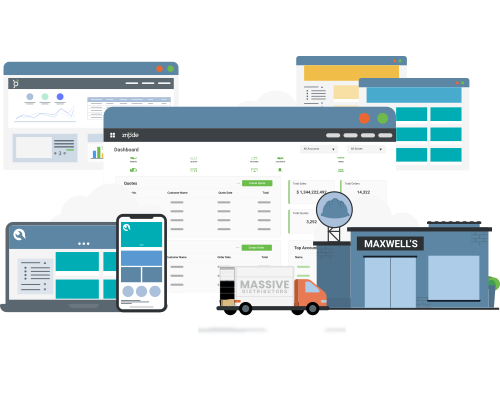
Znode delivers core B2B capabilities such as account-based catalogs, approval workflows, role-based purchasing, and customer portal experiences directly in the platform. These processes are available through configuration rather than external components.
BigCommerce B2B Edition supports some B2B use cases, but many operational workflows, including quotes, approvals, reporting, and advanced purchasing behavior, rely on plug-ins or additional applications. The B2B edition is a separate app that was acquired and is not part of the core BigCommerce code. Longterm, limitations of the app, along with the limitations of the B2C platform, create the need for custom code and expensive maintenance.
Znode reduces operational overhead. BigCommerce’s plug-in architecture raises ownership costs over time.

Znode was built for B2B from the beginning
Znode is part of a privately held company that is profitable and focused specifically on B2B commerce. Product development and support are focused on B2B ecommerce, including workflows such as purchasing, pricing complexity, and multi-organization commerce.
BigCommerce operates a broad commerce platform with B2B offered as an extension of its core retail platform. Supporting multiple priorities can require B2B functionality to rely on additional plug-ins or acquisitions rather than native functionality or a dedicated operational roadmap. Organizations selecting a platform should evaluate company alignment alongside functionality.
Znode is dedicated to B2B. BigCommerce supports B2B within a broader commerce strategy.
Comparing Znode and BigCommerce B2B Edition
B2B Ecommerce Features
| Feature | Znode | BigCommerce B2B Edition |
|---|---|---|
| Multi-Store | Yes, Native, Unlimited | Yes, Limited |
| Account-Based Catalogs | Yes, Native | No |
| Customer-Specific Pricing | Yes, Native | Yes |
| Customer-Specific Catalogs | Yes, Native | No |
| Tiered, Contract Pricing | Yes, Native | Yes |
| Account Management Roles & Permissions | Yes, Native | Yes, Limited |
| Quotes, RFQs | Yes, Native | With Plug-Ins |
| Order Approval Workflows | Yes, Native | With Plug-Ins |
| Reordering, Saved Carts, Quick Order | Yes, Native | No |
| Sales Rep Impersonation & Tools | Yes, Native | Limited |
| Customer Portal | Yes, Native | No |
| Dealer & Distributor Enablement | Yes, Native | No |
| B2B2X Support | Yes, Native | No |
| Self Service Portal | Yes, Native | No |
| Dealer & Distributor Portal | Yes, Native | No |
| Sales Rep Portal | Yes, Native | No |
Modern Commerce Capabilities
| Feature | Znode | BigCommerce B2B Edition |
|---|---|---|
| CMS with Drop and Drag Page Builder | Yes, Native, Unlimited | No |
| Headless Front-End | Yes | Yes, Limited |
| Personalization | Yes, Native | With Plug-Ins |
| Multi-Language | Yes, Native | With Plug-Ins |
| Multi-Currency | Yes, Native | Yes, Native |
| Language Translation | Yes, Native | With Plug-Ins |
| Regional Content Personalization | Yes, Native | No |
| AI-Enabled MCP Server | Yes, Native | No |
| AI-Powered Site Search | Yes, Native | Yes, Native |
| AI-Powered Search Engine Optimization | Yes, Native | Yes, Native |
| Promotions | Yes, Native | With Plug-Ins |
| BI Reporting | Yes, Native | With Plug-Ins |
Architecture and Extensibility
| Feature | Znode | BigCommerce B2B Edition |
|---|---|---|
| Headless | Yes | Yes, Limited |
| API-First | Yes, 2,500+ API Endpoints | Yes |
| Customization Layer via API | Yes, Limitless Extension Points | Yes, Limited |
| Distributed SaaS | Yes | No |
| Upgrade Impact | Low | High |
| Native ERP Integrations | Yes, Commerce Connector | Limited, Partner Led |
| Integration Type | Real-Time + Batch | Limited, Partner Led |
| Third-Party System Integrations | Yes | No |
| Integration Logging and Monitoring | Yes, Native | No |
Performance and Scalability
| Feature | Znode | BigCommerce B2B Edition |
|---|---|---|
| Supports Large SKU Counts | Yes | No |
| Infrastructure Model | Distributed SaaS | Open SaaS |
| Global Deployment | Yes | Yes |
| Scalability | Unlimited | SMB, Mid-Market Scale |
B2B2C Capabilities
| Feature | Znode | BigCommerce B2B Edition |
|---|---|---|
| Supports B2B2C | Yes, Native | No |
| Supports Multiple Catalogs per Store | Yes | No |
| Central Governance | Yes | No |
| White Label Sites and Microsites | Yes, Native | No |
When Znode is a better fit
Znode is commonly selected by leading organizations transforming B2B sales and support rather than simple online ordering.
Znode fits best when organizations need:
- Customer specific pricing, approvals, and purchasing workflows
- Customer portals, dealer and distributor portals, and sales rep portals
- Multiple storefronts, brands, or customer segments
- Large catalogs and complex product relationships
- A single platform instead of multiple extensions
- Larger digital transformation initiatives that include multiple brands, multiple regions or locations, and various customer segments and buyer journeys
When BigCommerce may fit
BigCommerce may align with organizations primarily running a single online storefront with simpler purchasing requirements.
BigCommerce may fit best when organizations have:
- A single primary storefront
- Limited pricing complexity
- Minimal approval workflows
- Smaller product catalogs
- Internal willingness to pay for and manage plug-ins and integrations
- Simple B2B ecommerce projects such as wholesale-to-retail sites
Znode vs BigCommerce FAQs
Znode is a B2B ecommerce platform that natively manages pricing, purchasing workflows, portals, and multi-store commerce directly in the platform. BigCommerce has a rich heritage in retail and supports B2B through extensions and additional applications sold as a B2B Edition.
Many advanced B2B workflows in BigCommerce, such as quotes, approvals, and reporting, commonly rely on plug-ins or third-party applications. Znode provides these capabilities natively within the platform.
Znode includes dealer and distributor portals, and supports B2B2X ecommerce models with native functionality. BigCommerce B2B Edition cannot natively support B2B2X. BigCommerce has known issues with managing price lists and customer-specific catalogs.
BigCommerce offers price lists and customer group pricing, but it’s limited to one active price list per customer group and a single pricing model (fixed or percentage-based) per list. Managing contract-specific pricing, multi-tier agreements, and account-based pricing structures often require additional apps or customizations.
Znode natively supports contract pricing, customer-specific catalogs, approval workflows, and account hierarchies without relying on third-party extensions.
B2B commerce involves ongoing operational processes such as approvals, purchasing controls, and customer specific pricing. Native functionality reduces integration effort, simplifies maintenance, and improves long-term platform reliability.
Platforms requiring multiple extensions and integrations introduce additional licensing, maintenance, and support. Znode consolidates B2B functionality into a single platform, reducing long-term operational costs.
Considering BigCommerce? Review your B2B Requirements with the Znode Team to Determine the Right Fit.
Request a demo.Take a tour of Znode to experience the difference.