
Znode
Adobe Commerce
A detailed comparison of Znode and Adobe Commerce for manufacturers and distributors
evaluating B2B ecommerce architecture, scalability, and operational ownership.
Executive summary
Adobe Commerce was built for retail and extended to support B2B, while Znode was designed specifically for it. Znode supports complex pricing, account hierarchies, workflows, and integrations operate natively within a unified platform, without reliance on extensions or workarounds. Adobe Commerce originated as a retail platform and gained traction through its Magento foundation. Its B2B capabilities were added later and often require extensions, customization, and ongoing development to support complex B2B requirements.
The difference comes down to architecture and total cost of ownership. Znode delivers a complete B2B SaaS platform with built-in performance, simplified updates, and predictable cost. Adobe Commerce introduces additional complexity through customization, ecosystem dependencies, and ongoing optimization effort.
What is Znode?
Znode is a distributed SaaS B2B ecommerce platform designed for manufacturers and distributors. It provides native support for complex pricing, account-based purchasing, multi-store management, and B2B2X operations. The platform operates independently of retail architecture and integrates with ERP, CRM, PIM, and other operational systems through its API-first architecture and Commerce Connector.
What is Adobe Commerce?
Adobe Commerce is a commerce platform that originated in retail and later introduced B2B functionality through additional modules and extensions. It operates in a single-tenant SaaS model and often relies on customization and partner-led development to support complex B2B requirements. The platform is part of the broader Adobe ecosystem, where commerce integrates with other Adobe digital experience products.
Znode is built for B2B; Adobe Commerce was adapted to it
Znode was designed specifically for B2B ecommerce. Complex pricing, account hierarchies, and purchasing workflows operate natively without retail workarounds or heavy configuration.
Adobe Commerce originated as a retail platform and gained early traction through its open-source Magento offering. Its B2B capabilities were added later and often rely on extensions or custom development to support the complexity of manufacturers and distributors, often increasing overall total cost of ownership.
Znode delivers B2B as a native model. Adobe Commerce extends retail to support it.
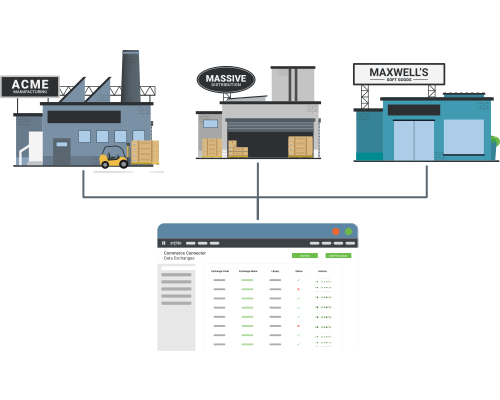

Znode delivers SaaS without ecosystem lock-in
Znode operates as distributed SaaS. Infrastructure, scaling, and updates are managed as part of the platform, reducing operational ownership.
Adobe Commerce typically involves licensing, hosting, extensions, and partner-led development. Over time, ecosystem dependency increases total cost of ownership, while B2B becomes one component of a broader Adobe strategy.
Znode delivers focused B2B SaaS. Adobe Commerce requires ecosystem alignment.
Znode architecture supports performance at scale
Znode uses compiled code within a distributed SaaS architecture. Commerce logic and integrations operate in a unified framework, maintaining consistent performance as complexity grows.
Adobe Commerce runs on a PHP-based, Magento-derived framework that typically requires code-level tuning at scale. Large catalogs and layered extensions increase processing load and create performance variability. Built on a legacy Magento foundation, Adobe Commerce often requires ongoing performance optimization as implementations grow. This increases operational overhead and dependence on development resources.
Znode delivers performance through architecture, with dedicated environments designed for stability and scalability. Distributed SaaS enables performance isolation and supports consistent performance as demand increases.
Znode scales through platform architecture. Adobe Commerce scales through development effort.
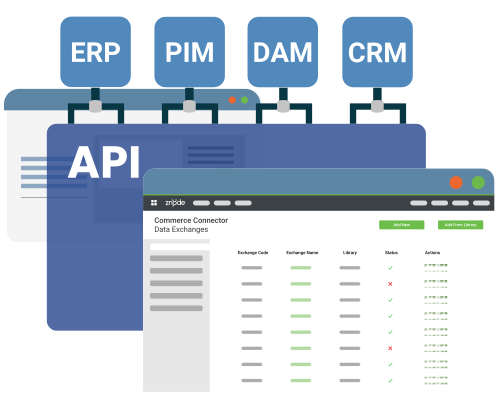
Comparing Znode and Adobe Commerce
B2B Ecommerce Features
| Feature | Znode | Adobe Commerce |
|---|---|---|
| Multi-Store | Yes, Native, Unlimited | Yes, Native |
| Account-Based Catalogs | Yes, Native | Requires B2B Module |
| Customer-Specific Pricing | Yes, Native | Requires B2B Module |
| Customer-Specific Catalogs | Yes, Native | Requires B2B Module |
| Tiered, Contract Pricing | Yes, Native | Requires B2B Module |
| Account Management Roles & Permissions | Yes, Native | Yes, Extensions or Customization |
| Quotes, RFQs | Yes, Native | Requires B2B Module |
| Order Approval Workflows | Yes, Native | Requires B2B Module |
| Reordering, Saved Carts, Quick Order | Yes, Native | Yes, Native |
| Sales Rep Impersonation & Tools | Yes, Native | Requires B2B Module |
| Customer Portal | Yes, Native | Yes, Limited |
| Dealer & Distributor Enablement | Yes, Native | No, Customization |
| B2B2X Support | Yes, Native | No, Customization |
| Self Service Portal | Yes, Native | No, Customization |
| Dealer & Distributor Portal | Yes, Native | No, Customization |
| Sales Rep Portal | Yes, Native | No, Customization |
Modern Commerce Capabilities
| Feature | Znode | Adobe Commerce |
|---|---|---|
| CMS with Drop and Drag Page Builder | Yes, Native, Unlimited | Yes, Native |
| Headless Front-End | Yes | Partial |
| Personalization | Yes, Native | Yes, Native |
| Multi-Language | Yes, Native | Yes, Native |
| Multi-Currency | Yes, Native | Yes, Native |
| Language Translation | Yes, Native | Yes, Native |
| Regional Content Personalization | Yes, Native | Yes, Native |
| AI-Enabled MCP Server | Yes, Native | No |
| AI-Powered Site Search | Yes, Native | Partial |
| AI-Powered Search Engine Optimization | Yes, Native | Partial |
| Promotions | Yes, Native | Yes, Native |
| BI Reporting | Yes, Native | Yes, Native |
Architecture and Extensibility
| Feature | Znode | Adobe Commerce |
|---|---|---|
| Headless | Yes | Partial |
| API-First | Yes, 2,500+ API Endpoints | Partial |
| Customization Layer via API | Yes, Limitless Extension Points | No |
| Distributed SaaS | Yes | No |
| Upgrade Impact | Low | High |
| Native ERP Integrations | Yes, Commerce Connector | No |
| Integration Type | Real-Time + Batch | No, Custom Development |
| Third-Party System Integrations | Yes | No, Customization |
| Integration Logging and Monitoring | Yes, Native | No |
Performance and Scalability
| Feature | Znode | Adobe Commerce |
|---|---|---|
| Supports Large SKU Counts | Yes | No |
| Infrastructure Model | Distributed SaaS | Single Tenant SaaS |
| Global Deployment | Yes | Yes |
| Scalability | Unlimited | Limited |
B2B2C Capabilities
| Feature | Znode | Adobe Commerce |
|---|---|---|
| Supports B2B2C | Yes, Native | No |
| Supports Multiple Catalogs per Store | Yes | No |
| Central Governance | Yes | No |
| White Label Sites and Microsites | Yes, Native | No |
When Znode is a better fit
Znode is commonly selected by manufacturers and distributors with complex B2B requirements and long-term digital growth plans.
Znode fits best when organizations need:
- Native B2B functionality without relying on add-on modules
- Large or growing product catalogs
- Account hierarchies, contract pricing, and approval workflows
- Multi-store, dealer, or distributor portal support
- Structured ERP, CRM, and PIM integrations
- Distributed SaaS infrastructure with low upgrade impact
When Adobe Commerce may fit
Adobe Commerce may align with organizations that prioritize retail-led experiences or are already standardized on the Adobe ecosystem.
Adobe Commerce may fit best when organizations have:
- Strong internal development teams or partner resources
- Existing investment in Adobe Experience Cloud products
- Simpler B2B requirements layered onto retail commerce
- Tolerance for module-based architecture and extension management
- A preference for managing infrastructure and upgrade coordination
Znode vs Adobe Commerce FAQs
Znode is a distributed SaaS B2B ecommerce platform built specifically for manufacturers and distributors. Core B2B functionality such as contract pricing, account hierarchies, multi-store management, and dealer enablement operates natively in the platform.
Adobe Commerce originated as a retail platform and later introduced B2B modules. Many advanced B2B capabilities require extensions or customization. The primary difference is architectural foundation and operational ownership.
Adobe Commerce includes B2B functionality, but it was not originally designed as a B2B-first platform. B2B capabilities are delivered through additional modules and configuration layered onto a retail foundation.
Znode was designed specifically for B2B ecommerce, with complex pricing, purchasing workflows, and account structures built into the core platform.
Znode is designed to support large SKU counts, multi-catalog environments, and account-specific pricing within a distributed SaaS architecture.
Adobe Commerce often requires additional infrastructure planning and development effort as catalog size and extension complexity increase.
Znode is designed to support large SKU counts, multi-catalog environments, and account-specific pricing within a distributed SaaS architecture.
Adobe Commerce often requires additional infrastructure planning and development effort as catalog size and extension complexity increase.
Znode operates as distributed SaaS, where infrastructure and platform updates are managed as part of the service. Upgrade impact is typically low.
Adobe Commerce operates in a single-tenant model. Updates often require coordination across extensions, infrastructure, and development resources.
Considering Adobe Commerce? Take a Tour of Znode to Experience the Difference.
Review your B2B requirements with the Znode team to determine the right fit. Request a demo.